The counter
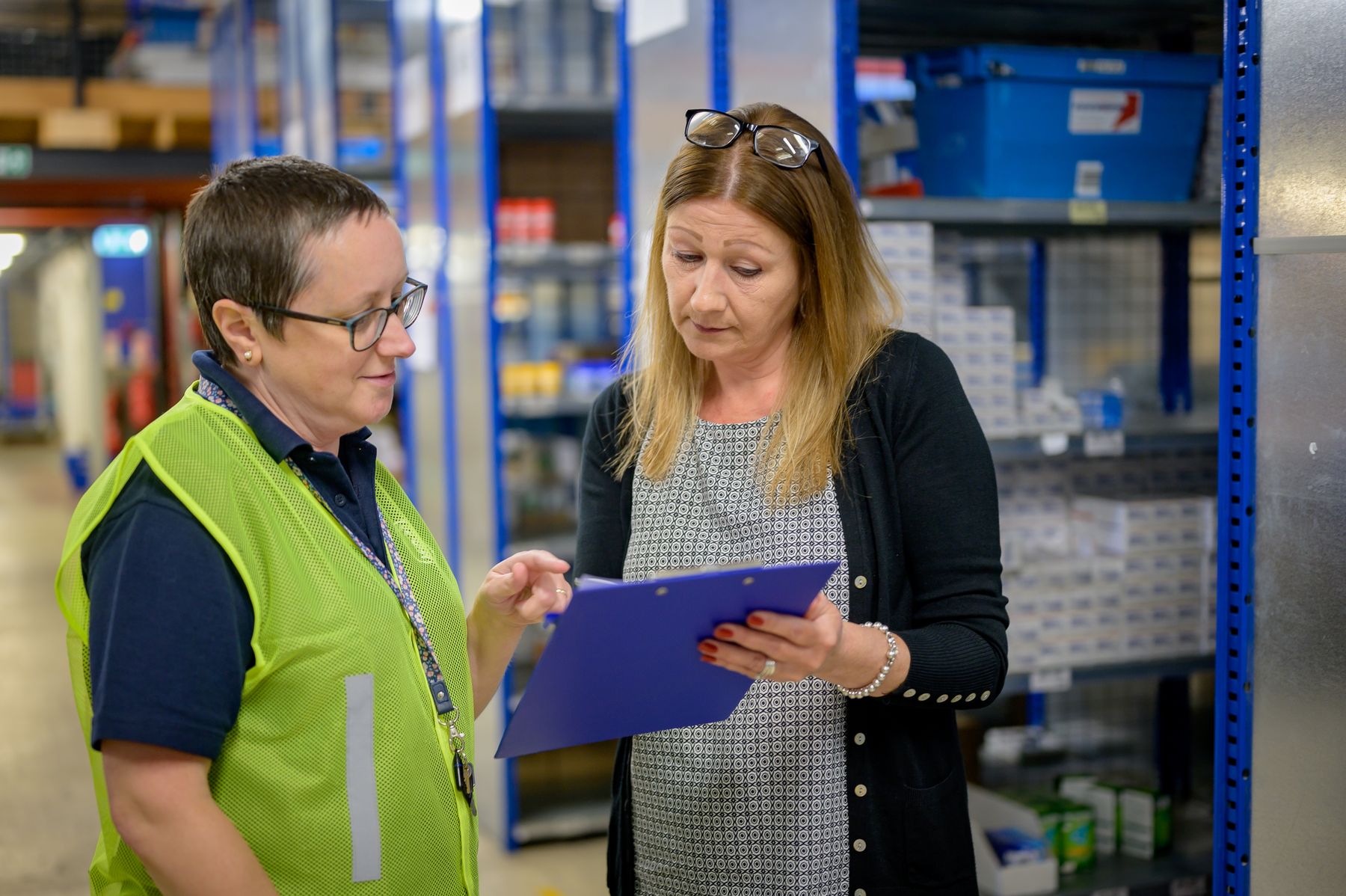
Staff search for the customer terms, check stock and write down delivery details while the customer waits.
 OperiQ
Illustrative case study · fictional example
Northfield Trade Supply is a fictional independent builders’ merchant created to demonstrate the case-study format. The people, company and order are not customer evidence.

The fictional merchant
The team takes enquiries by phone and at the counter. A typical order can include customer-specific pricing, products held in more than one area, an account invoice and a delivery booked for later in the week.
The problem is not a lack of paperwork. It is that each handover can create a new version of the same order.
Before OperiQ · illustrative scenario
Staff search for the customer terms, check stock and write down delivery details while the customer waits.
The same order is re-entered for the invoice and checked again before it reaches the trade account.
Picking and delivery notes rely on the latest piece of paper reaching the right person.
The order
The fictional customer has agreed pricing, a credit limit and an overdue invoice that the counter team needs to see before confirming the sale.
“Can you get it to site on Thursday morning—and keep the invoice against our account?”Fictional enquiry used for layout review
One connected journey
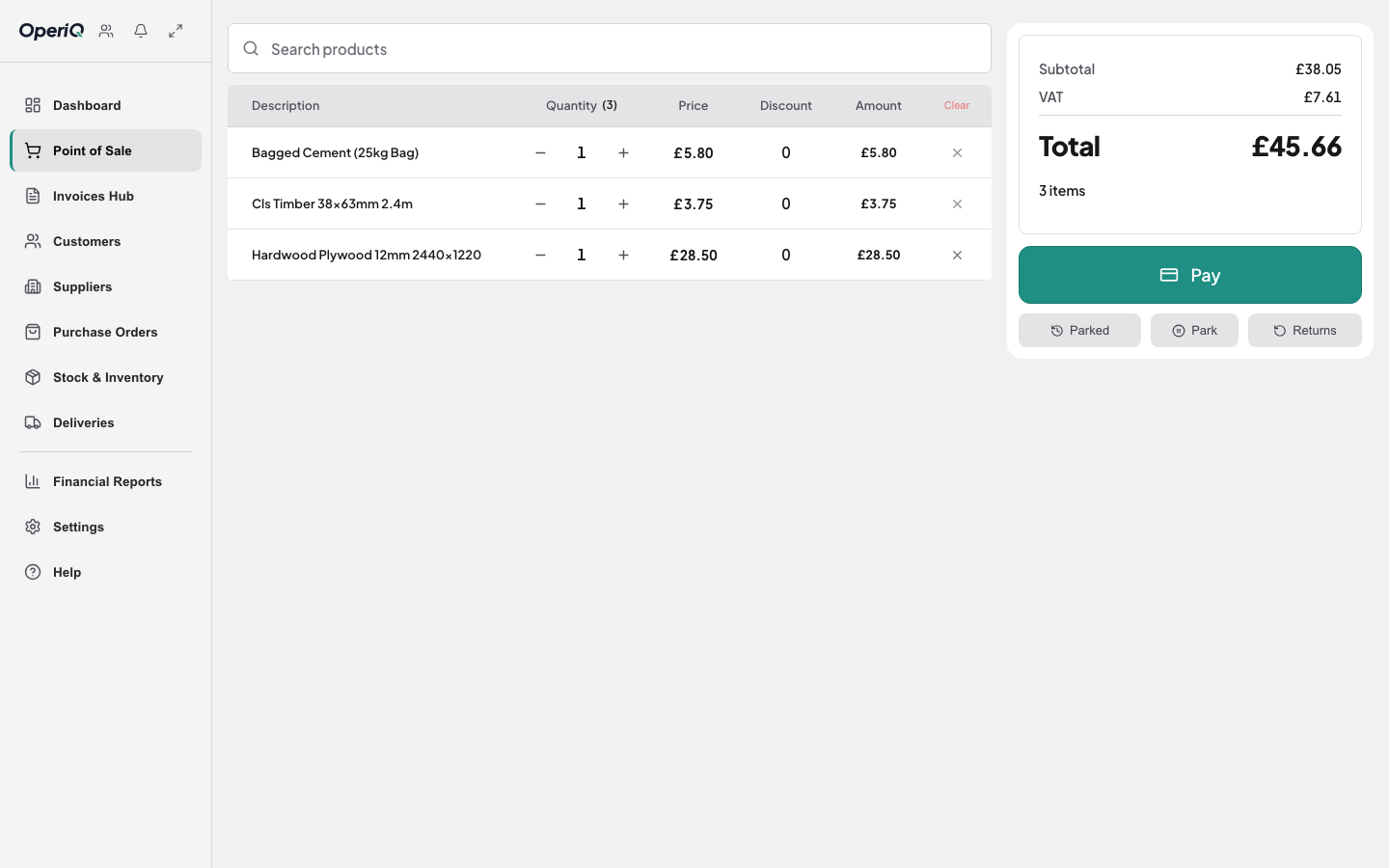
The counter opens the customer record and sees the pricing and account context before agreeing the order.
Products, quantities and fulfilment stay on the same sale. Short stock can be reviewed through purchasing.
The invoice carries the original customer and order information into the trade-account record.
The delivery desk receives the address, notes and order lines, then retains completion evidence against the job.
What a real story must prove
A published customer case study should name the task that changed, explain how it was measured, state the period covered and disclose any limitation.
Intended outcomes to verify
Whether one order record removes duplicate entry between the counter, office and delivery desk.
Whether staff can see pricing, stock and account context at the point they need it.
Whether delivery notes and completion evidence remain connected to the originating sale.
These are evaluation questions, not measured customer results.
Your operation
We can follow it from enquiry to fulfilment and show where OperiQ fits—and where requirements still need confirmation.